Divorce and family matters
Divorce and family concerns in Hiroshima: what foreign residents should prepare
Key points
Our office does not handle divorce cases. Please read this page as general information only.
For divorce and family matters, organize your relationship with your spouse, matters concerning children, and living expenses separately. If you are worried about your status of residence, check with the Immigration Services Agency of Japan or an administrative scrivener (行政書士).
This article provides general information for preparing to speak with a lawyer. It is not a legal assessment of an individual case and does not guarantee any outcome. The available procedures and their effects depend on the circumstances.
Lawyer: Ryo Kondo · Member of the Hiroshima Bar Association
Registration No. 68207
Updated:
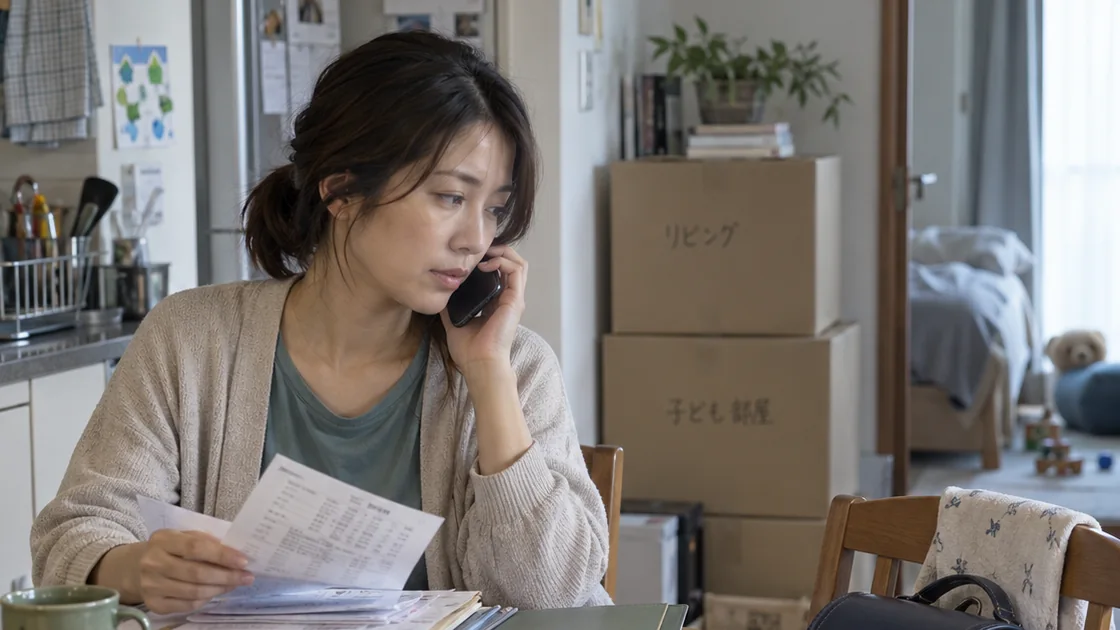
Organize your family situation and current living arrangements
Record your spouse's name, whether you are living together or separately, whether you have children, and who currently pays the household expenses.
First, check which country's law applies to the divorce. If both spouses have the same nationality, the law of that country generally applies. If their nationalities differ and both live in Japan, Japanese law generally applies. If one spouse is a Japanese national living in Japan, Japanese law applies (Act on General Rules for Application of Laws, Articles 27 and 25). Time limits explained here, such as the one for dividing property, apply when Japanese law governs the divorce. The residence status notification explained below is required in the same way, whichever country's law governs the divorce. Which country's law applies to child support and parental authority (親権) is decided separately from the divorce, based on matters such as the country where the child lives and the child's nationality. Other countries' laws may also have time limits, so check without waiting.
To have the family court decide how property is divided after a divorce, you must file a request within five years of the divorce (Civil Code, Article 768(2), proviso). If you divorced on or before March 31, 2026, the period is two years from the divorce.
If you divorced by agreement (協議離婚, kyogi rikon: a divorce filed at a city, ward, town or village office) without deciding child support, the parent who mainly raises the child can still claim 20,000 yen per month for each child from the other parent. This is called statutory child support (法定養育費; Civil Code, Article 766-3), and it applies to divorces on or after April 1, 2026.
If you do not want your spouse or family to know that you are seeking advice, state at the outset which method of contact is safe for you.
Keep documents and messages
Keep documents concerning the marriage, housing, living expenses and children, as well as messages exchanged with your spouse. Do not delete or alter the original records.
Even if you do not understand a Japanese document, keep it in a form that can be shared as a clear photograph or PDF.
If you are worried about your status of residence
If separation or divorce makes you worried about your status of residence, check with the Immigration Services Agency of Japan or an administrative scrivener (行政書士).
If you are a mid- to long-term resident (usually someone with a residence card) and hold, as a spouse, the status of Dependent (家族滞在), Spouse or Child of Japanese National (日本人の配偶者等), or Spouse or Child of Permanent Resident (永住者の配偶者等), you must submit a notification to the Immigration Services Agency of Japan within 14 days from the date of the divorce or your spouse's death (Immigration Control and Refugee Recognition Act, Article 19-16, item (iii)). Check your current status of residence on your residence card, then read the agency's page, "Notification concerning a spouse," to confirm whether this applies to you and how to submit it.
If you have the status of Spouse or Child of Japanese National (日本人の配偶者等) (excluding a person who was born as a child of a Japanese national or who is a specially adopted child (特別養子) of a Japanese national) or Spouse or Child of Permanent Resident (永住者の配偶者等) (excluding a person who was born in Japan as the child of a permanent resident or special permanent resident and has remained in Japan since) and remain in Japan without engaging in activities as a spouse continuously for six months or more, with no legitimate reason for not doing so, revocation of your status of residence may become an issue (Immigration Control and Refugee Recognition Act, Article 22-4(1), item (vii)). If you have the status of Dependent (家族滞在) and remain in Japan without engaging in the activities of that status continuously for three months or more, with no legitimate reason for not doing so, the same issue may arise (item (vi) of the same paragraph).
FAQ
Frequently asked questions
Questions about this legal issue
What should I prepare if children or living expenses are involved?
Record the children's names and ages, their current living arrangements, school or childcare situation, and who pays which living expenses. The appropriate procedure and likely effect must be assessed from the individual circumstances.
Should I keep messages exchanged with my spouse?
Keep the original messages, documents, photographs, and payment records without editing them. If you make a separate summary, distinguish it from the original record.
Will divorce affect my status of residence?
The effect depends on the status you currently hold and your individual circumstances. State your current status and expiry date. Our office does not handle the application concerning status of residence itself. If needed, we will direct you to other professionals, such as administrative scriveners (行政書士).
Questions about consulting or retaining Ryo Kondo
Does sending the online intake form mean that Ryo Kondo has agreed to represent me?
No. The online intake form is an initial way for the lawyer to review your situation. Submitting it does not mean that the lawyer has accepted the matter or that a lawyer-client relationship has begun.
Will the information I share be kept confidential?
Lawyers have a legal duty to protect confidential information learned through their work. The handling of information submitted through the website is also described in the privacy policy.
How much does a legal consultation cost?
A legal consultation costs JPY 6,600 (tax included) for 30 minutes. Consultations in English are JPY 3,300 (tax included) for 30 minutes, for requests received by January 31, 2027. Fees and the proposed next steps for handling your case will be explained before you formally retain the lawyer. Consultations take place in person at our office. You can talk with the lawyer directly in English, without an interpreter. You can also consult on Saturdays or Sundays, depending on the situation. As a rule, we accept payment of the consultation fee in cash. If an interpreter is needed, we will arrange one, and the person consulting pays the interpreter's fee. We may use AI translation tools during the consultation.
Can I attend a meeting if I am not confident using Japanese?
If you would like to communicate in a language other than Japanese, we will confirm the available options individually. The lawyer will review the facts with you and provide legal explanations and assessments.
Official information