Employment problems
What to Check When a Foreign Worker in Hiroshima Has Unpaid Wages
If your wages have not been paid, first record these five points separately.
How much pay you were promised
When you were promised it would be paid
How much you actually received
What was deducted from your pay
What the company explained
You can consult someone based on what you know, even if you cannot calculate the unpaid amount exactly.
Laws and rules protecting workers also apply to foreign workers in Japan. Discrimination based on nationality in wages or other working conditions is prohibited (Article 3 of the Labor Standards Act). If you are worried about your status of residence, raise that concern alongside the pay issue while keeping the two questions separate.
This article provides general information. Whether you can demand payment, how much you can demand, when you need to act, and whether you can actually recover the money may change depending on the contract, how you actually worked, the payday, and the company's explanation.
This article provides general information to help you prepare before speaking with a lawyer. It is not a legal assessment of an individual case and does not guarantee any outcome.
Lawyer: Ryo Kondo · Member of the Hiroshima Bar Association
Registration No. 68207
Updated:
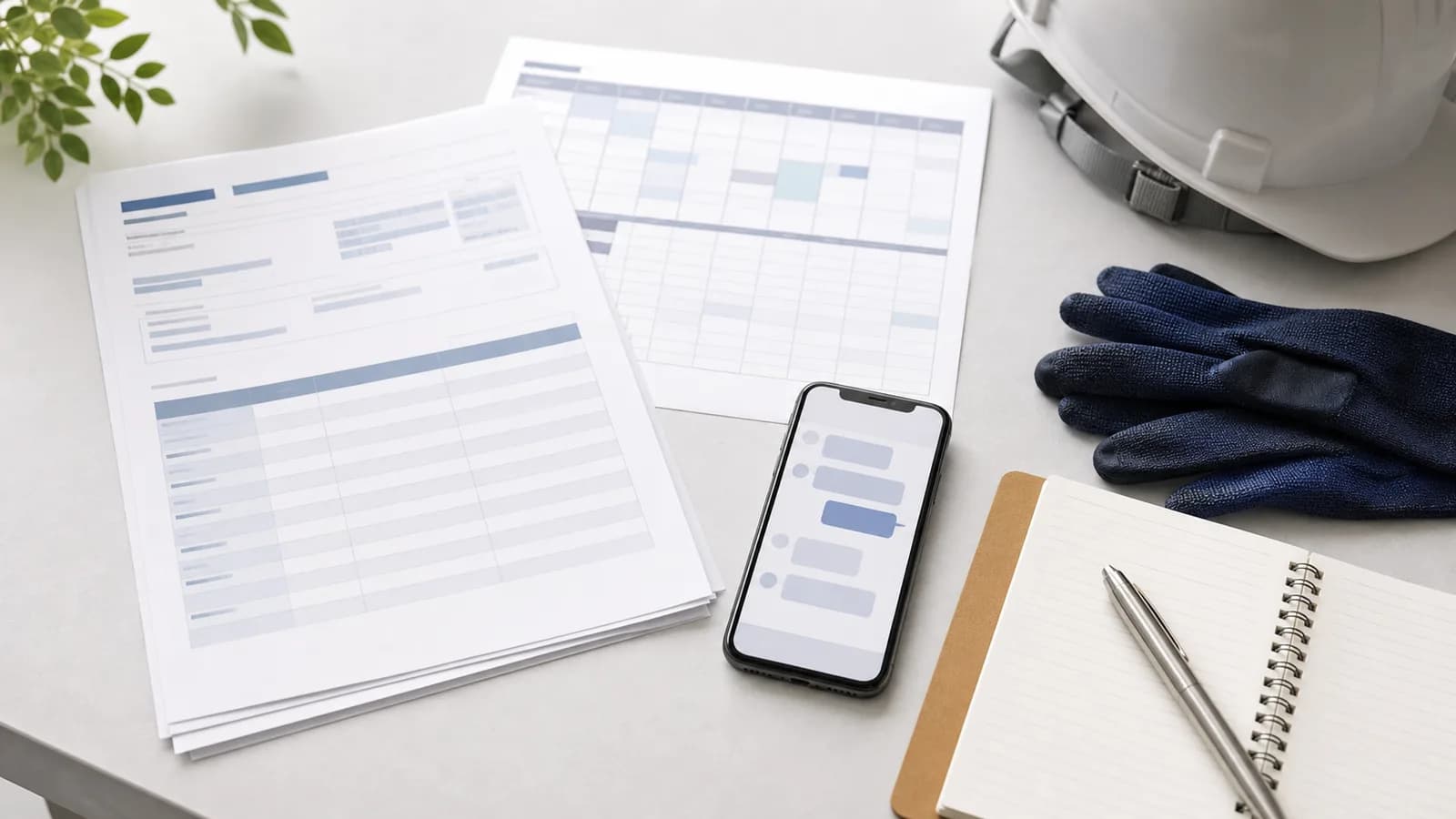
What should you check first when your wages are unpaid?
For each month in which you were supposed to receive wages, list the following items.
| Item to check | What to write |
|---|---|
| Wage period | The dates covered by the work, from what date to what date |
| Promised pay | Monthly pay, daily pay, hourly pay, and various allowances |
| Scheduled payday | The date written in the contract or pay statement (pay slip) |
| Amount actually received | Bank deposits, cash, international transfers, and so on |
| Amount deducted from pay (deductions) | Taxes; insurance premiums such as health insurance and employees' pension (social insurance premiums); dormitory fees; food costs; equipment costs; and so on |
| Amount you think is unpaid | An approximate amount is acceptable if you cannot calculate it exactly |
| Company's explanation | The reason it says it cannot pay, the date it said it would pay, and who gave the explanation |
As a basic rule, wages in Japan are paid in currency, directly to the worker, in full, at least once a month and on a fixed payday. Some deductions, such as taxes and social insurance premiums, are permitted under laws or regulations and the required procedures (Article 24(1)–(2) of the Labor Standards Act). A smaller deposit alone does not settle the issue; check what was deducted and why.
Compare the contract with how you actually worked
If you have a contract stating your working conditions (employment contract), a written notice from the company stating your working conditions (notice of working conditions), or documents showing that the contract was renewed, check the pay, payday, workplace, and type of work. If the contract was only in Japanese, also make a note of what language was used and what was explained when you were hired.
If the company named in the contract, the company that actually directed your work, and the company that paid your wages were different, write each company's name and the responsible person separately. Even if the contract is titled “business outsourcing,” the points to check may change depending on the actual directions and working arrangement, so do not decide based on the title alone.
Compare the pay statement with the payment record
If you have a payslip, compare the gross pay and deductions shown there, then compare the net amount stated on it with the amount actually deposited for the same pay period. If you were paid in cash, record the date, amount, person who paid you, and any receipt or message.
When checking whether your hourly pay reaches the legal minimum (minimum wage), you need to check the area where you worked, the industry, and which items are included in the pay (Article 4(1) and (3) of the Minimum Wage Act, concerning the duty to pay at least the minimum wage and wages excluded from its calculation). Check the latest amount for Hiroshima Prefecture and the date that amount starts (effective date) on the Hiroshima Labour Bureau minimum wage page.
How should you check money deducted from your wages?
For each deduction from your wages, write these four points separately.
Name of the deducted item
Amount deducted
Explanation you received from the company
Materials such as the contract, company rules (work rules), pay statement, or consent form
In addition to taxes and social insurance premiums, issues may involve dormitory fees, food costs, uniforms or equipment, transfer fees, and damages the company claims you caused. The name of an item alone does not determine whether the deduction is legally permitted. At the same time, the company cannot automatically deduct claimed damages freely from your wages (Article 24(1) of the Labor Standards Act).
If there is a deduction you were not told about, a deduction whose amount changes each month, or a document you do not remember signing, write down those circumstances too. Even if you signed a document, it may be necessary to check what language was used to explain it, the circumstances in which you signed, and whether you could refuse.
How should you record what the company said?
If the company said things such as “We cannot pay,” “We will pay next month,” “We deducted the dormitory fee,” or “You caused damage at work,” record the following in order.
When it was said
Who said it
What language was used
Which wages the explanation concerned
When and how much the company said it would pay
Whether there is an email, social-media message, recording, or written document
If you cannot write accurately in Japanese, first record it in a language that is easy for you to use. Do not delete the original text or audio, and save it separately from the translation. Keep company messages in a form that shows the other person's name, the date and time, and the surrounding conversation so that the sequence of events can be checked more easily.
Can you consult someone after leaving the job or returning to your country?
You can consult someone about unpaid wages even after you have left the job or returned to your country. In your consultation timeline, separately record the last day you worked, the date your employment ended, the date the final wages were scheduled to be paid, the date you asked the company to pay, the company's response, and your planned return date. If you are returning to your country, keep an email address or phone number that works outside Japan. Also check whether you will still be able to use a bank account after returning home and whether you can deposit wages you have already received into it. Keep payment or transfer records you can check from overseas and any original notices from the company or a public authority that remain available to you. Confirm the applicable claim requirements, deadlines, contact method, and transfer procedure for your case rather than relying on this article alone.
When a former worker requests payment, the company must pay wages and return the worker’s money and belongings within seven days after receiving the request (Article 23(1) of the Labor Standards Act). Even if part of the amount is disputed, the company must pay the undisputed wages and return undisputed belongings within that period (Article 23(2)). Check whether and when the request was received and which amounts are disputed.
The limitation period for wage claims is not necessarily counted all at once from the day you started or stopped work. In principle, check the due date for each wage payment. For wages due on or after April 1, 2020, the legal period is five years, with a transitional three-year period for the time being (Articles 115 and 143(3) of the Labor Standards Act; Article 2(2) of the Supplementary Provisions to the 2020 amending Act). Consulting someone or sending a demand letter does not necessarily prevent the limitation period from expiring. Seek individual advice promptly about older unpaid wages.
What should you do if overtime pay, company closure, or dismissal is involved?
The materials to check and the legal procedures may change depending on the cause of the nonpayment.
Only overtime pay has not been paid
Check starting and ending work times, breaks, holidays, shifts, time cards, and work messages. Calculation may change under arrangements such as pay set in advance to include overtime pay (fixed overtime pay) or a system that changes working hours from day to day (variable working-hours system). For details, organize the issue using the article on overtime pay for foreign workers.
The company closed, became insolvent, or cannot be contacted
Save information about the company's current situation, the last day you worked, the date you left the job, the unpaid amount, and notices you received from the company. If certain conditions are met, you may be able to use the government advance-payment scheme for unpaid wages (a system that advances wages when the company cannot pay you), but the eligible amount and deadlines have conditions. Check the details in the article on company closure and unpaid wages.
The company suddenly made you stop working, or asked you to sign a resignation notice or agreement
Check unpaid wages separately from being made to stop working unilaterally by the company (dismissal) and from resignation issues. Save the date and time you were told of the dismissal, the reason, whether there is a written notice, and the materials you were asked to sign. For details, organize the issue using the article on dismissal of foreign workers and the article for cases where you are asked to sign a resignation notice.
What materials should you keep before consulting someone?
You can consult someone even if you do not have all the materials. Starting with what you have, save the original data without deleting it.
A contract stating working conditions (employment contract), notice of working conditions, and documents showing contract renewal
Pay statements and the annual tax-withholding certificate
Bank account deposit history, records of cash received, and international transfer records
Shift schedules, time cards, and screens from an attendance app
Messages, photographs, location information, and work records showing when work started and ended
Emails, social-media messages, recordings, and written documents in which the company explained the reason for nonpayment or the scheduled payment date
Dismissal notice, resignation notice, agreement, and notice of company closure or insolvency
A copy of your residence card, materials showing the period of stay, and notices from immigration authorities or other bodies
A timeline memo you made of workdays, amounts received, and the company's explanations
For the overseas records mentioned above, keep only those relevant to the unpaid-wage consultation. A transfer alone does not establish whether it counts as wages or whether recovery is possible. You do not need to make a new transfer or open a new account.
For detailed ways to preserve materials, check the article on organizing evidence for a foreign worker's legal consultation.
If returning to the company to collect materials or contacting the other party would increase danger, do not force yourself to collect them. If your passport, residence card, bankbook, or mobile phone has been taken from you, or if there is violence, threats, or forced movement outside or return to your country, prioritize safety and urgent consultation over collecting materials.
Record, as far as you know, who is keeping your passport or residence card, whether you asked for it to be returned, whether you were told to return to your country, and when, by whom, and how it was said. This is not a recommendation to return to the company alone to get them back or to force yourself to contact someone when doing so would be dangerous. If your bankbook or mobile phone has been taken, prioritize safety together with checking whether there is violence or a threat.
Should you tell the consultant about a concern regarding your status of residence together with the pay issue?
Yes. The pay issue and the status-of-residence issue do not necessarily lead to the same conclusion, but leaving a job, changing jobs, or a dispute with the company may relate to residence procedures. Tell the consultant the following as far as you know.
Type of status of residence and period of stay
Date you left the job or plan to leave it
Whether you have a next job
What the company said about your status of residence
Documents received from immigration authorities or other bodies, and their deadlines
Whether you plan to return to your country
These are items to organize so you can tell the consultation contact about them separately from the wage timeline, not items for deciding the conclusion about your status of residence yourself. Make one note of whether your next job is decided, what the company explained, when you received documents from immigration authorities or other bodies, what deadlines are written in them, and whether you plan to return to your country. Do not decide the possibility of applying or the likelihood of permission from unpaid wages alone.
You cannot determine how to apply for a status of residence or the likelihood of permission from unpaid wages alone. Also check the article for concerns about status of residence. If the period of stay or a document-submission deadline is near, tell the consultant that deadline first.
How should you use public offices and a lawyer consultation?
Each consultation contact has a different role.
Labour Standards Inspection Office (a government office that investigates violations of rules about pay and working hours): A contact point for consulting or making a report about suspected violations of laws and rules protecting workers, such as nonpayment of wages. An administrative investigation and request that the company correct the issue (supervision and correction) are not the same as an individual asking the company to pay and recovering money (a civil claim and recovery).
Labour Bureau consultation, advice, and conciliation (a system supporting discussions between workers and companies): There are services for consultation about labor issues generally and for supporting discussions between workers and companies. The other party may not participate, and resolution is not guaranteed.
Labor tribunal and court (lawsuit): Court procedures for seeking payment or other relief. Except in special circumstances, labor tribunal proceedings are completed in no more than three hearing sessions (Article 15(2) of the Labor Tribunal Act). If an objection meeting the legal requirements is filed, the tribunal decision loses effect and the matter proceeds to litigation (Articles 21(3) and 22(1)).
Lawyer: Reviews the contract, materials, deadlines, and the other party's position, and considers possible responses including negotiations with the company and court procedures. A consultation or engagement does not guarantee an outcome.
The Hiroshima Labour Bureau provides information about consultation days in multiple languages for foreign workers. The languages, days, hours, and office with jurisdiction over your workplace may change, so check the latest information at the Hiroshima Labour Bureau information for consultations for foreign workers.
Before consulting in a language other than Japanese, organize and confirm your preferred language, the date and time you want to consult, whether an appointment is required, and whether the office has jurisdiction over your workplace. A labor consultation office handles consultations about pay and working conditions. An office that introduces jobs, an office handling residence procedures, and an individual legal consultation or engagement with a lawyer have different roles; do not receive guidance as if they were the same. Confirm languages, dates and times in the latest information from the public office you will consult.
Checklist before a consultation
Company name, workplace, person in charge, and contact details
Period worked, last day worked, and date you left the job
Promised pay, payday, and payment method
Actual deposits and cash received, and items deducted from pay
Months you believe are unpaid and the approximate amount
Whether overtime, holidays, or breaks are involved
Company's explanation, promises to pay, and contact history
Whether there was company closure, dismissal, a resignation notice, or an agreement
Type and period of status of residence, planned return, and notices with deadlines
Documents, images, messages, and bank history in your possession
Matters you want to explain in a language other than Japanese, and your interpretation or translation preference
Whether it is safe to contact the company or go to collect materials
Who holds your passport or residence card, any request for return, and when you were asked to return to your country
Return-home timeline and overseas contact, account, and records (see the section above)
Preferred language, desired consultation date and time, whether an appointment is needed, and the office with jurisdiction over your workplace
Frequently asked questions
Can I consult someone without a pay statement?
Yes. You can organize the period worked and payment status from a contract stating working conditions, work records, bank deposit history, and messages with the company. Also explain why materials are missing or why the company did not let you see them.
Can I consult someone even if I do not know the exact unpaid amount?
Yes. Write the promised amount, actual deposits, amount deducted, and days and hours worked separately; you can start checking from an approximate amount. The exact amount to demand in payment will be considered after checking the materials and the other party's explanation.
Does this also apply if only part of the wages was paid?
It may apply. Separate, for the relevant month, the amount promised, the amount received, and what was deducted. Whether the deduction is legally permitted and the unpaid amount must be checked individually from the contract, pay materials, and other information.
Can I consult someone after leaving the job or returning to my country?
Yes. See the section above on consulting after leaving the job or returning home for the dates, contact details, and overseas records to organize. Because deadlines may matter, seek advice promptly about older unpaid wages.
What should I do if the company has closed and I cannot contact it?
Save notices from the company, the last day you worked, the date you left the job, the unpaid amount, and materials showing the company's location and representative, if known. Different systems or deadlines may apply from an ordinary demand for wage payment, so also check the article on company closure.
I was told there is a problem with my status of residence. Can I not claim my wages?
Check separately what the company said about your status of residence and whether you were paid for the work you did. Even if a problem concerning your status of residence is suspected, do not give up consulting for that reason alone; tell the consultant the type and period of your status of residence, the actual work, and the company's explanation. Whether you can specifically demand payment and what will happen with residence procedures must be checked individually.
For people who want to discuss their individual circumstances
You can enter information through the web intake form, including the unpaid months and approximate amount, company name, payday, what the company said, and your period of stay, to the extent known. If it is difficult to explain in Japanese, enter the information while looking at a memo written in a language that is easy for you to use.
Entering the web intake form alone does not start a formal legal consultation or a contract authorizing a lawyer to handle procedures for you (engagement agreement). After reviewing the intake information, we will explain the scope in which we can respond, any additional information needed, the fees, and how the matter would proceed.
If you have not decided whether to consult someone yet, you can see how the web intake works.
Official information
e-Gov Laws and Regulations Search (the national laws and regulations database): Labor Standards Act
Ministry of Health, Labour and Welfare: Five basic principles for payment of wages
Ministry of Health, Labour and Welfare: Limitation period for wage claims
Hiroshima Labour Bureau: Minimum wage in Hiroshima Prefecture
Hiroshima Labour Bureau: Consultation information for foreign workers
Ministry of Health, Labour and Welfare: Government advance-payment scheme for unpaid wages
Last checked: September 25, 2026
FAQ
Frequently asked questions
Questions about consulting or retaining Ryo Kondo
Does sending the online intake form mean that Ryo Kondo has agreed to represent me?
No. The online intake form is an initial way for the lawyer to review your situation. Submitting it does not mean that the lawyer has accepted the matter or that a lawyer-client relationship has begun.
Will the information I share be kept confidential?
Lawyers have a legal duty to protect confidential information learned through their work. The handling of information submitted through the website is also described in the privacy policy.
How much does a legal consultation cost?
Submitting the online intake form is free. A legal consultation costs JPY 6,600 for 30 minutes. Fees and the proposed next steps for handling your case will be explained before you formally retain the lawyer. Interpreter fees have not yet been determined.
Can I attend a meeting if I am not confident using Japanese?
If you would like to communicate in a language other than Japanese, we will confirm the available options individually. The lawyer will review the facts with you and provide legal explanations and assessments.
Check online intake status
When online intake is open, the form asks what happened, who is involved, and whether there is a deadline. The intake page shows its current status.
Check online intake status